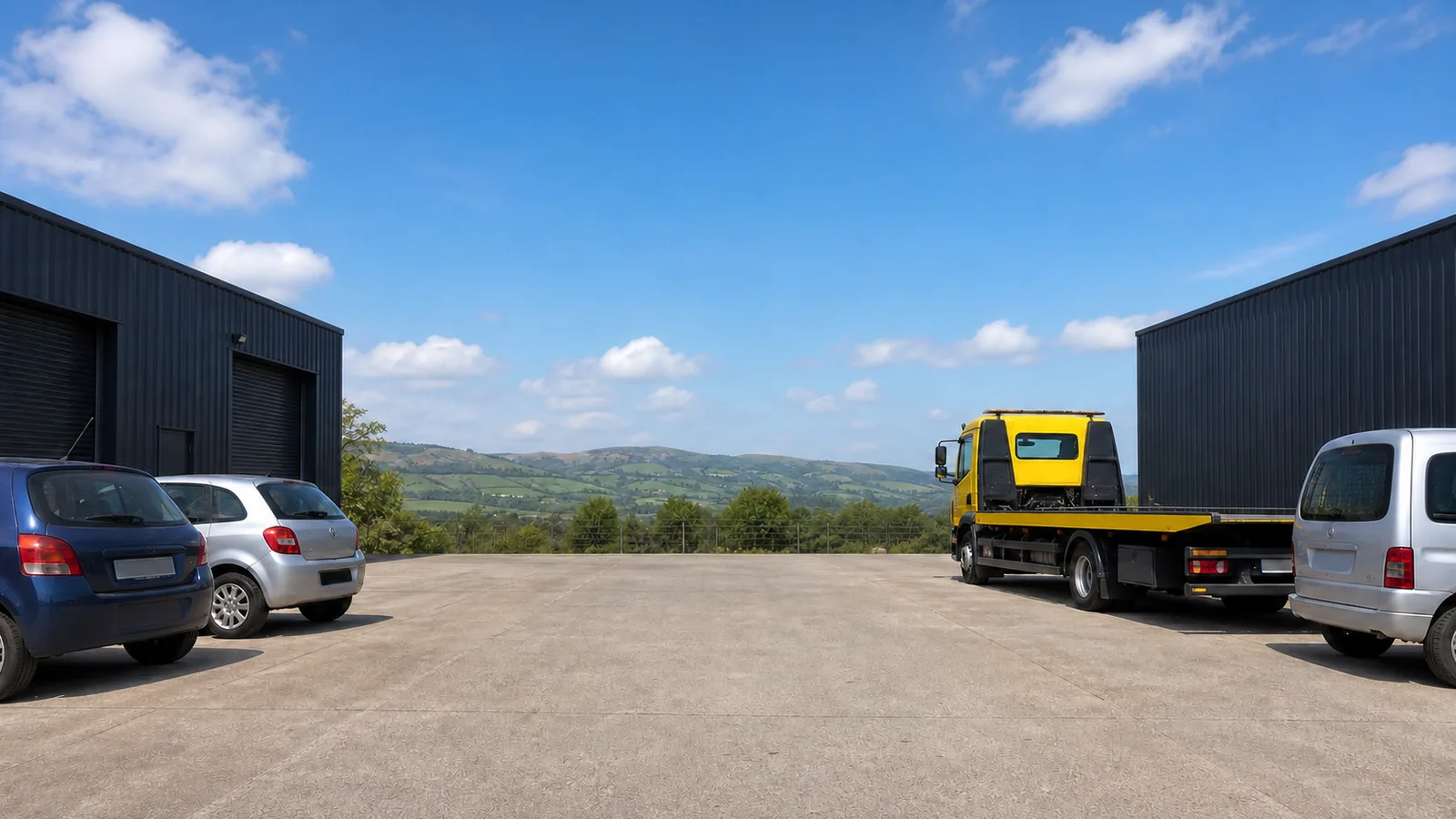
When a car is being discarded as an end-of-life vehicle, it must reach a permitted authorised treatment facility (ATF). A collector can recover it and a registered waste carrier can transport it, but those roles alone do not allow either business to store, depollute, dismantle or treat the vehicle at an unpermitted site.
Why does an end-of-life car need controlled treatment?
An unwanted vehicle contains valuable material, but it also contains substances and components that can harm people, soil and water if they are handled badly. At a permitted ATF the vehicle is identified, stored on a suitable surface and prepared for treatment under environmental controls. That process is different from simply parking damaged cars in a yard or removing saleable parts.
If Blackburn Scrap Yard arranges collection, the recovery is the first step in that authorised route. Ask where the vehicle is going and keep the handover record so the collector, receiving facility and vehicle can be traced.
What is removed during depollution?
Depollution covers fuel, oil, coolant and brake fluid, together with other liquids that must not reach drains or the ground. The battery, tyres, refrigerant from air-conditioning systems and hazardous or pressurised components also need controlled removal. Catalytic converters and other components containing recoverable or controlled materials are managed through appropriate treatment routes.
The exact process varies with the vehicle. A petrol hatchback, diesel van, hybrid and electric car do not present identical systems or risks. Do not drain fluids, open an air-conditioning circuit or interfere with a high-voltage battery merely to prepare a car for collection. Describe damage, leaks, missing parts and battery warnings beforehand so safe recovery can be planned.
What happens to the material after treatment?
Suitable components may be prepared for reuse. Metals, plastics, glass, tyres and other materials are separated for recycling or recovery where practical, while residues that cannot be recovered go to an appropriate disposal route. The law sets targets of 95% recovery and 85% reuse or recycling as an annual average by weight across end-of-life vehicles. Those figures are performance targets across the ELV stream, not a promise that every individual car will achieve exactly those percentages.
Which handover and destruction records should I keep?
Keep the quote, collector details, collection receipt, bank-payment record and DVLA transfer confirmation. Blackburn Scrap Yard completes the motor-trade transfer notification with the registered keeper's consent. When an eligible car, light van or qualifying three-wheeler is completely scrapped, the receiving ATF records the destruction and issues the applicable Certificate of Destruction. A vehicle that is repaired or resold follows a different transfer outcome and does not receive a CoD.
Check that each record shows the correct registration and, where stated, the VIN. If a promised confirmation does not arrive, contact the operator promptly while the collection details are still easy to trace.
Where can I check the environmental rules?
Read the government's end-of-life vehicle guidance for the recovery and recycling framework. The Environment Agency's guidance for waste sites handling ELVs explains permitting, storage, depollution and destruction records in more detail.
Legal Context
Vehicle collection, waste carriage and permitted treatment are separate roles. An end-of-life vehicle must reach a permitted ATF for controlled storage, depollution and treatment, with the applicable ATF destruction record created only when the eligible vehicle is completely scrapped.
Why This Matters
Unverified collectors, leaking vehicles, informal fluid draining, assuming a waste-carrier registration is an ATF permit and failing to keep the handover trail can leave the vehicle or environmental responsibility unclear.
Quick Step-by-Step Summary
- Describe leaks, damage, battery type and missing parts before collection
- Confirm the collector and receiving ATF route
- Keep the collection and bank-payment records
- Keep Blackburn's DVLA transfer confirmation
- Retain the applicable ATF destruction evidence
Sources & References
- GOV.UK end-of-life vehicle guidance
- Environment Agency guidance for waste sites handling ELVs
Helpful External Links
- https://www.gov.uk/guidance/elv
- https://www.gov.uk/guidance/end-of-life-vehicles-elvs-guidance-for-waste-sites